
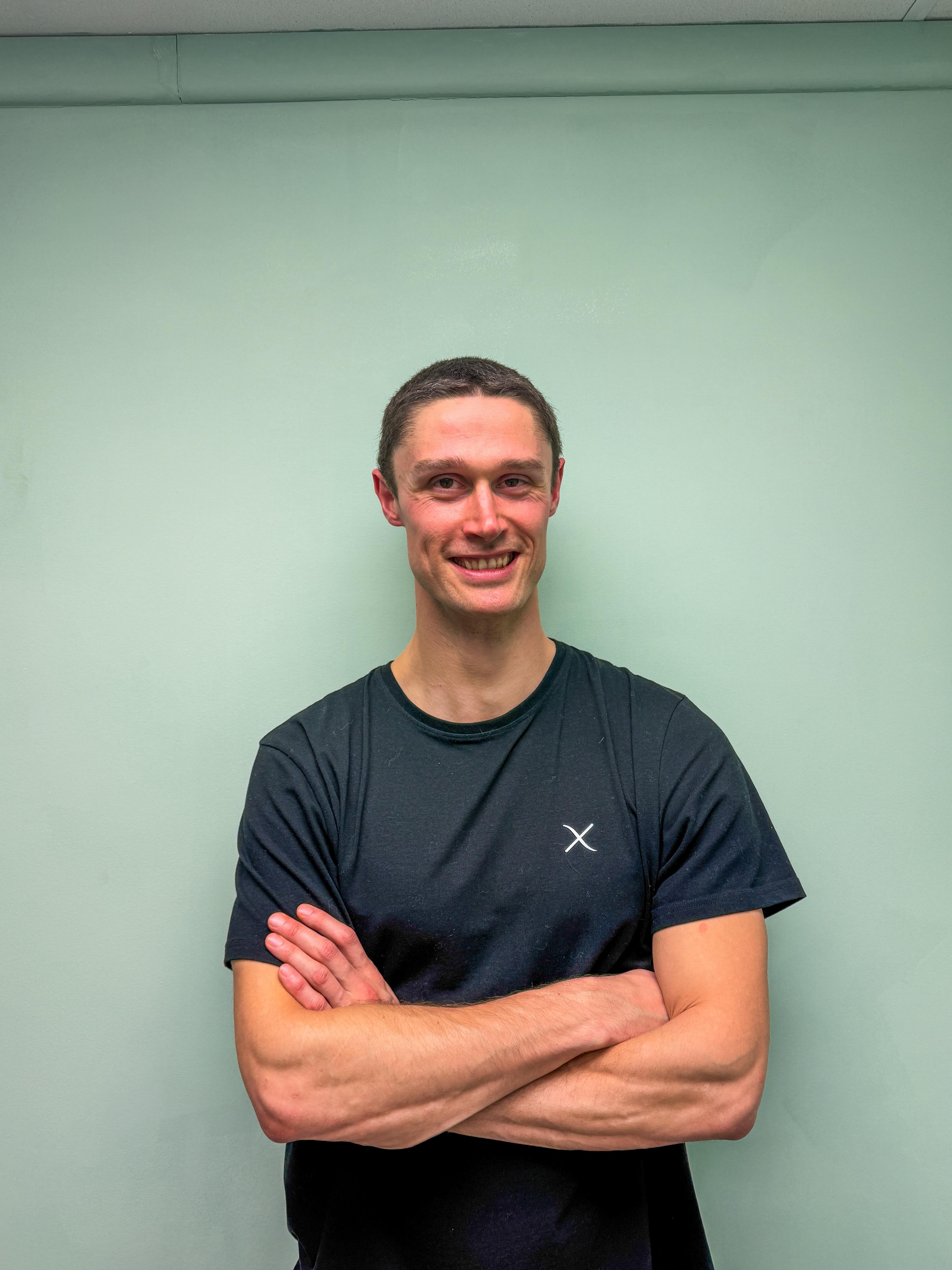
I came to sports massage after a long personal journey of physiotherapy and rehabilitation. This was forced upon me after a hard fall made my left hip twist up, making my left leg effectively an inch shorter than my right; over time this caused scoliosis, and extreme dysfunction throughout my entire musculoskeletal system. This dysfunction resulted in many injuries, aches and “niggles” while playing sports and lifting weights and none of the many physiotherapists I saw were able to fix the underlying problems that were responsible for my pain.
Eventually I decided to try and fix it myself and found foam rolling to be the most effective way to relieve pain and tension; however, many areas of the body are not practical to foam roll so I started using my hands to apply pressure instead. During this process I realized the benefits of deep, fascial release massage which led me to qualify as a sports massage therapist so I could use my experience to help others.
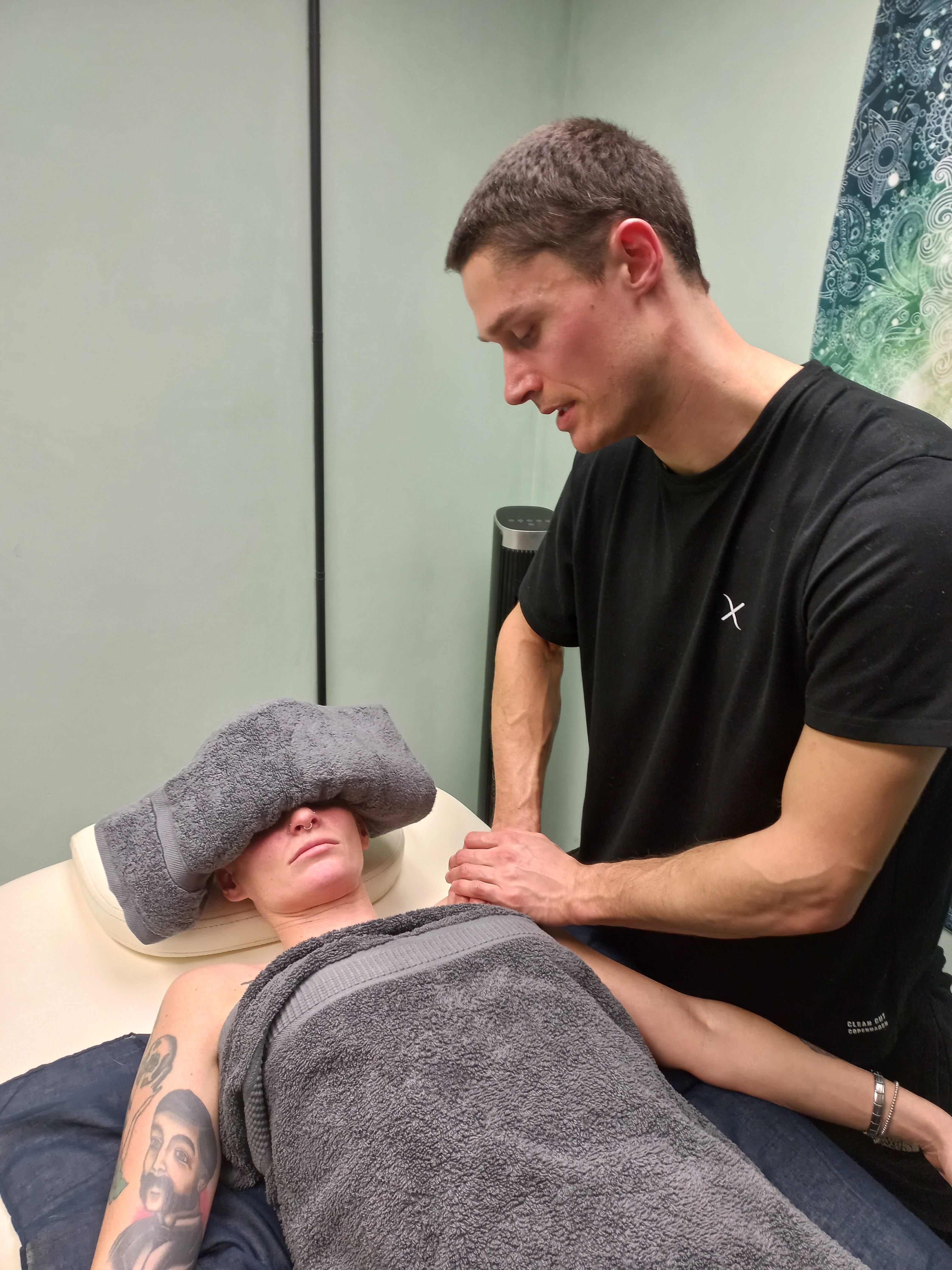
The primary aim of my practice is to help release the contracted muscle and adhesions in the fascia that we call “knots” and, in doing so, relieving pain and restoring proper function in that tissue. I achieve this using pressure and movement to both break down fascial adhesions in the muscle tissue and promote blood to flow into the area, this lubricates the muscle fibres and allows them to move without pain or restriction. I also focus on general spinal decompression as the spine is the centre of the body and, in my experience, any imbalance or dysfunction in the spine will radiate out to affect the entire body.
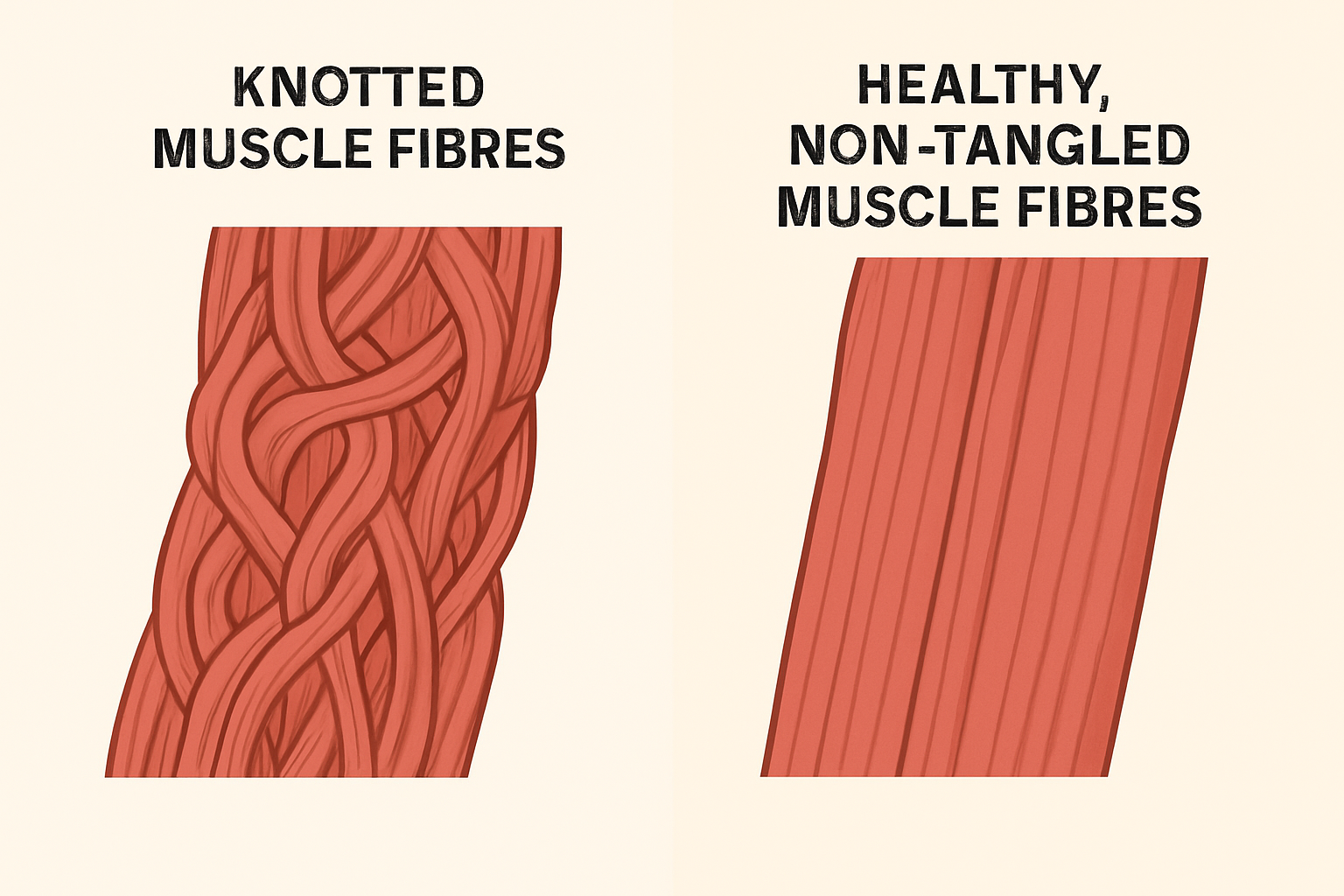
Fascia is a web-like membrane made primarily of collagen that wraps around most structures within the body including both muscles and individual muscle fibres within a muscle. In healthy muscle tissue these membranes are hydrated and provide lubrication, allowing muscle fibres to move and slide against each other without restriction. Although the exact mechanism as to how “knots” form has not been officially proven, a likely hypothesis is that chronic tightness or injury in an area of muscle tissue causes a loss of blood supply, resulting in dehydration. This dehydration causes the facial membranes surrounding muscle fibres to “stick” together and eventually form adhesions that prevent the muscle fibres from sliding against each other; resulting in a dense area of “stuck” tissue which reduces the muscles overall capacity to lengthen. This has a “tightening” effect on the muscle and reduces the tissues overall elasticity, making it much more prone to both chronic (tendonitis) or acute (strain) injuries; it is also the cause of poor posture and joint alignment.
These adhesions accumulate throughout life and are the reason why people become increasingly stiff and immobile as they age, this however can be stopped or even reversed with regular stretching and massage.

This approach to massage can fix or at least improve most forms of soft tissue dysfunction or chronic injury and can therefore benefit everyone, it is not just for athletes or people who play sport. These soft tissue dysfunctions include general back/joint pain, tendonitis, poor posture, tennis/golfers elbow, plantar fasciitis and more. It can even benefit certain nerve conditions such as sciatica and thoracic outlet syndrome by releasing tension around the tissue that is “pinching” the nerve.
£40
£30
Email: jakesrichardson@googlemail.com
Phone: 07423 055623
Facebook: JSR Massage Therapy
Location: The Hot Tribe, The Shambles, Worcester, WR1 2RA